




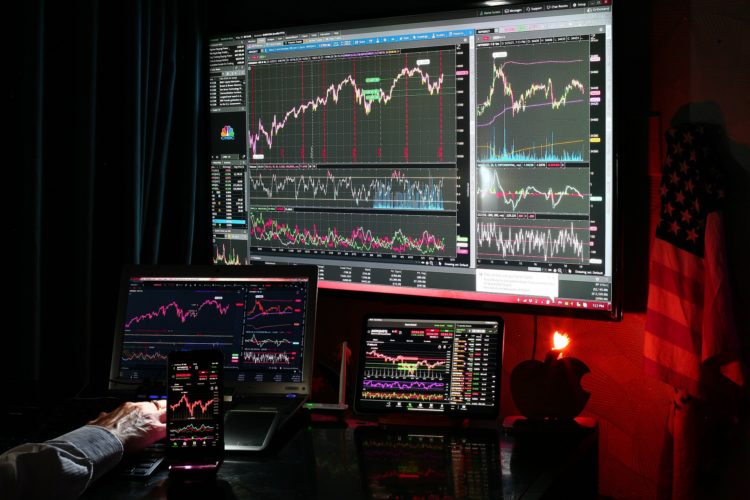
On October 15, 2026, a hotter-than-expected US inflation print sent bitcoin sliding to roughly $80,400–$80,500 — down about 2.6% in 24 hours and, briefly, below $80,000 for the first time in a month. The coin later bounced to around $82,000, a snapback that liquidated roughly $50 million in short positions within 60 minutes.
The turbulence cascaded across the market. CoinDesk, citing CoinGlass data, reported nearly $1 billion in crypto liquidations over 24 hours — about $483 million in bitcoin and ether futures alone (roughly $286 million in ether and $197 million in bitcoin). Other major assets fell hard: ether dropped more than 6% to around $2,350, XRP fell 5%, Solana slid 5.5%, Dogecoin dropped 6%, and Zcash tumbled 13%. Solana and Zcash liquidations ran to roughly $31 million and $19 million, respectively.
The inflation trigger
The selloff began with the US inflation data. Headline CPI came in at 3.7% according to one source, while core inflation printed at 2.6% versus a 2.5% forecast, per CoinDesk — close on paper but hot enough to jolt expectations. Markets quickly repriced Federal Reserve expectations, with traders pricing roughly a 27% chance of a rate hike at the October 27–28 meeting.
For crypto, the rates channel is everything. Digital assets trade like high-beta risk assets: when expected interest rates rise, the present value of distant cash flows falls, borrowing gets more expensive, and speculative capital retreats. The same repricing that sank bitcoin also pressured tech stocks — Nasdaq 100 futures fell 1.2% after Anthropic told prospective investors its Q3 revenue was $16.8 billion with slowing growth, adding to the risk-off mood.
US spot bitcoin ETFs felt the outflow: they lost about $261 million on Wednesday, per SoSoValue data.
How liquidation cascades work
The near-$1 billion in liquidations is the part worth studying, because it illustrates a structural feature of crypto markets that turns ordinary selloffs into violent ones.
Most crypto trading happens on leverage through perpetual futures contracts. Open interest stood at roughly $52 billion in bitcoin contracts and $30 billion in ether contracts. When the price falls far enough, leveraged long positions breach their margin requirements and the exchange force-closes them — selling into an already-falling market. That selling pushes prices lower, which triggers the next layer of margin calls, which triggers more selling. This is a liquidation cascade.
The mechanism cuts both directions. When bitcoin bounced back toward $82,000, roughly $50 million in short positions were liquidated in 60 minutes — the mirror image of the same forced-closing dynamic.
For founders: this reflexivity is a feature of crypto market structure, not a bug. Any business model that depends on token prices, crypto treasury values, or on-chain activity as revenue will inherit this volatility.
The equity market contrast
Interestingly, US equities rebounded the following session. The Dow rose 556.21 points (+1.08%) to 52,177.69; the S&P 500 gained 0.33% to 7,744.06; and the Nasdaq ticked up 0.08% to 26,713.03, as Treasury yields dropped and rotation moved into defensive sectors.
The divergence is instructive. Equities had a buffer — falling yields and sector rotation absorbed the shock. Crypto, with its embedded leverage and no circuit-breaker equivalent for perpetual futures, had no such cushion. The same macro event produced a mild equity day and a violent crypto day because the market structures are different.
Why it matters for founders and investors
- Macro timing shapes your raise. Founders raising in crypto-adjacent sectors should watch inflation prints and Fed meetings the way public-company CFOs do. A hot CPI can close the funding window for weeks by repricing risk appetite.
- Treasury management matters. If your startup holds crypto on its balance sheet, understand that a 2–3% spot move can be amplified into double-digit portfolio damage through leveraged positions elsewhere in the market. Keep operating cash out of leveraged exposure.
- Volatility creates entry points. Liquidation cascades wash out weak leverage. Investors with dry powder and long time horizons historically buy the aftermath, not the peak — the cascade is the signal, not the event to chase.
Angeled.com connects founders with investors.
Sources: CoinDesk (Oct 15), AiTraderView/CoinGlass (Oct 16), coindoo.com (Oct 15), HDFC Sky (Oct 16).
Read Next
The Data-Center Backlash Is Now an Election Issue — and Infrastructure Funding Will Feel It
Alphabet Discloses $548M Qualcomm Stake in Q3 13F Filing — What a 13F Really Shows
Friday's Bounce After the AI Rout: What the Rebound Really Signals
The AI Trade Unwind: What the November 5 Rout Means for Founders
U.S. Stocks Plunge as Nasdaq Enters Correction in AI Trade Unwind
Ad-Tech Splits in Q3: Magnite's Connected TV Surges 39% While Criteo Shrinks 11%