




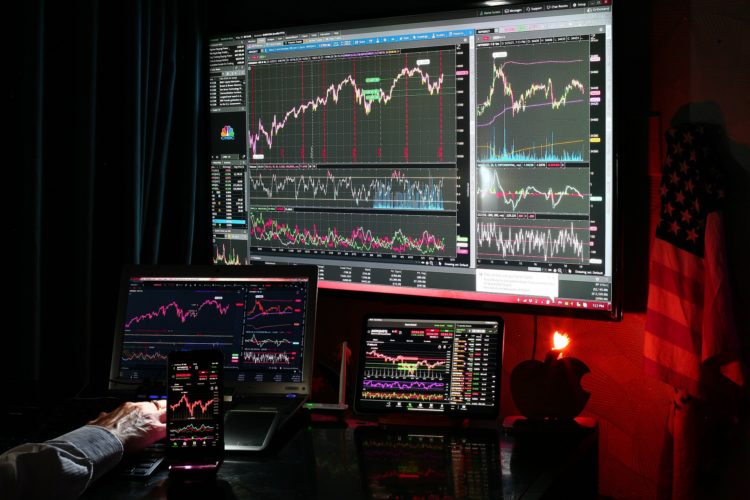
Brazil's financial markets went into freefall on Monday, October 26, 2026, after President Luiz Inácio Lula da Silva won Sunday's presidential runoff. The benchmark Ibovespa index plunged 13.88% to close at 176,608.23 points, its worst single-day percentage decline since March 2020. During trading it fell as much as 17.34% to an intraday low of 169,516.43, prompting exchange operator B3 to trigger a 30-minute circuit breaker — the first such halt since the COVID-19 pandemic, roughly six years and seven months earlier.
The Brazilian real collapsed alongside equities. The dollar closed up 8.21% against the real at R$5.403, after spiking intraday to R$5.6049, a gain of more than 12%. The shock spread to bonds and interest-rate futures, and Brazil's Treasury cancelled auctions for inflation-linked and fixed-rate bonds scheduled for October 27 and 29, while proceeding with an auction of bonds linked to the benchmark interest rate.
A Result Markets Had Not Priced In
Lula won 51.79% of valid votes, compared with 48.21% for Senator Flávio Bolsonaro. The result surprised investors who had positioned heavily for a Bolsonaro victory after he finished first in the initial voting round. Between mid-September and the runoff, the Ibovespa had gained nearly 25% on expectations of spending restraint, deregulation, and other business-friendly reforms under Bolsonaro.
That positioning is what turned a political surprise into a market crash. Investors had viewed a Bolsonaro administration as more likely to curb public spending, seen as key to lowering interest rates. Lula's victory forced a rapid reassessment of Brazil's fiscal outlook, interest rates, and corporate valuations — and because so much capital was lined up on one side, the unwind was violent.
Losses were broad-based. Petrobras fell 8.5%, Itaú dropped 13.2%, Bradesco sank 21.2%, Banco do Brasil plunged 27.3%, Itaúsa lost 12.1%, and Axia declined 11.8%. The exceptions proved the rule: Vale gained 4.5% ahead of its earnings release, and WEG rose 5.1% after announcing plans to acquire L&S Electric's PCS business. State-controlled banks suffered most, reflecting investor concern about government influence over lending and dividends.
Why Markets Reacted So Violently
This was a repricing of a result markets had not expected, not a panic over the vote itself. Prediction markets had given Bolsonaro roughly an 80% chance going into the weekend, according to one report. When the outcome flipped, three things happened at once: equity positions built for a Bolsonaro win were sold, currency hedges were unwound, and bond traders repriced Brazil's fiscal trajectory, pushing up borrowing costs.
The fiscal concern is concrete. Investors worry that spending commitments will make it harder to improve public finances, which are already strained by persistent primary deficits and rising public debt. A weaker real drives up import prices and heightens inflationary pressure, which in turn limits the central bank's room to cut interest rates. Higher market interest rates increase the government's borrowing costs — hence the cancelled bond auctions — and raise financing costs for companies and households.
Five-year credit default swap spreads widened from roughly 120 to 144 basis points, a measure of how much more expensive it has become to insure against a Brazilian sovereign default. JPMorgan reportedly cut its rating on the real and Brazilian government bonds to "neutral."
Circuit Breakers: What They Are and Why They Matter
A circuit breaker is an automatic trading halt triggered when an index falls by a set amount — in Brazil's case, a drop of more than 10% from the previous trading day halts trading for 30 minutes. The mechanism exists to give traders time to process information and prevent panic-driven cascades. That it had not been used in nearly seven years underlines how extreme Monday's move was.
Circuit breakers do not stop a selloff; they pause it. When trading resumed, the Ibovespa recovered some ground from its intraday low but still closed down nearly 14%. The halt's real value is informational: it forces a moment of reflection in a market dominated by algorithms and leveraged positions.
What Comes Next
Investors are now watching two things: Lula's fiscal plans and his choice of finance minister. A credible plan to stabilise government debt, and a finance minister markets trust, could steady the real and bond markets. The absence of either would keep borrowing costs elevated and corporate financing tight.
For context, the Ibovespa is now down 5.22% for October as a whole, while the dollar is up 4.40% against the real for the month.
What It Means for Founders and Investors
Brazil's crash is a textbook lesson in positioning risk. The market did not fall because Brazil's economy changed overnight; it fell because investors had crowded into one outcome. Founders and investors should apply the same discipline to their own bets: when everyone agrees on an outcome — an election, a rate decision, a product launch — the price of being wrong is highest precisely because the consensus trade is the most crowded.
For investors with emerging-market exposure, the episode is a reminder that political risk is not a footnote in developing economies; it is a primary driver of returns. Diversification across countries, currencies, and asset classes is the only reliable hedge against a single-country surprise.
For founders operating in or selling into Brazil, the practical effects are immediate: a weaker real raises import costs, higher interest rates raise borrowing costs, and tighter credit conditions make customers more cautious. Companies with dollar-denominated costs and real-denominated revenues face a margin squeeze. Pricing, hedging, and cash management matter more this week than growth targets.
Angeled.com connects founders with investors.
TradingView News, "Ibovespa Plunges as Lula Victory Triggers Broad Selloff" (October 26, 2026)
Source: ajupress.com
Aju Press, "Brazil's Stock Market Plummets 17% Following Lula's Reelection" (October 27, 2026)
Source: tokenpost.com
TokenPost, "Brazil Stocks Fall 13.88% After Lula Win as Circuit Breaker Halts Trading" (October 26, 2026)
Source: meridianews.org
Meridia News / Agência Brasil, "Dollar rises 8.21%, and stock exchange falls 13.88% after Lula's re-election" (October 26, 2026)
Source: eurasiabusinessnews.com
Eurasia Business News, "Brazilian Markets Crash 15% After Lula's Unexpected Election" (October 26, 2026)
Read Next
The Data-Center Backlash Is Now an Election Issue — and Infrastructure Funding Will Feel It
Alphabet Discloses $548M Qualcomm Stake in Q3 13F Filing — What a 13F Really Shows
Friday's Bounce After the AI Rout: What the Rebound Really Signals
The AI Trade Unwind: What the November 5 Rout Means for Founders
U.S. Stocks Plunge as Nasdaq Enters Correction in AI Trade Unwind
Ad-Tech Splits in Q3: Magnite's Connected TV Surges 39% While Criteo Shrinks 11%