




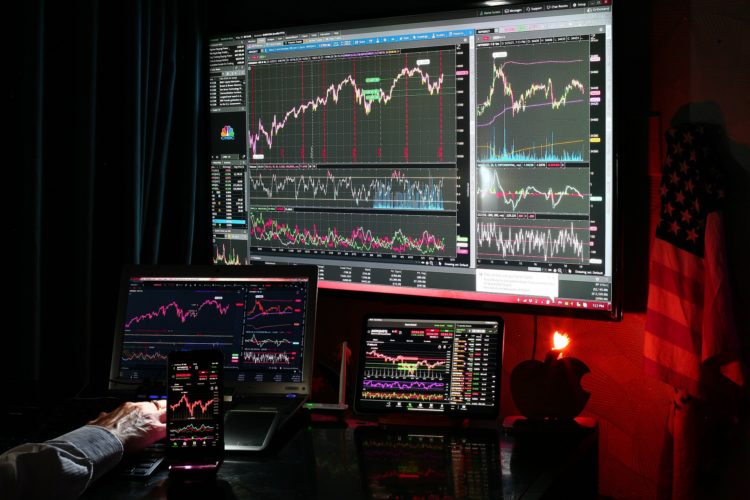
The U.S. Federal Reserve left its benchmark rate unchanged on Wednesday, October 28, 2026, holding the federal funds target range at 3.75% to 4.00% in a 10–2 vote. Stocks oscillated through the announcement and Chair Kevin Warsh's press conference, then ended higher — a calm surface over a real shift: traders raised December hike odds to roughly 85 percent.
Background: why a "hold" can still be hawkish
Central bank decisions are rarely just about the rate itself: markets parse the statement, the vote split, and the chair's press conference for signals about the next move. In September 2026 the Fed had raised rates a quarter point — its first increase since 2023 — amid persistent inflation. The October pause was widely expected: before the decision, futures implied roughly a 93 percent probability of no change, per CME's FedWatch tool as cited by CNBC.
But a hold can still tighten conditions if it convinces markets the next move is up. That is what happened on October 28. The Fed upgraded its assessment of the economy while acknowledging inflation "remains elevated," and said more information would help determine the stance needed for a timely return to its 2 percent target. Two officials dissented in favor of an immediate hike — Governor Lisa Cook, in her first dissent since joining the Board in 2022, and Cleveland Fed President Beth Hammack, per reporting on the FOMC statement. Meanwhile, the 10-year Treasury yield climbed to 5.05 percent, raising long-term borrowing costs even as the policy rate stood still.
What happened
According to Reuters' October 28, 2026 coverage, the FOMC voted 10–2 to hold at 3.75% to 4.00%. Chair Kevin Warsh said the central bank has made clear its willingness and readiness to act on inflation. Markets raised the implied probability of a 25-basis-point December hike to about 85 percent, up from about 78 percent on Tuesday, per CME's FedWatch tool. All three major indexes finished higher: the S&P 500 rose 0.28 percent to 7,743.98, the Nasdaq climbed 0.27 percent to 26,549.85, and the Dow added 0.19 percent to 52,475.10. "The Fed didn't throw any curveballs," said Ryan Detrick, chief market strategist at Carson Group. "It was widely expected they'd hold, so no big surprise there."
The decision landed amid a strong earnings season. With 200 S&P 500 companies having reported third-quarter results, 84 percent had beaten estimates, per LSEG data cited by Reuters, and analysts estimated aggregate earnings growth of 31.8 percent year-on-year, up from 30.6 percent as of October 1. Chip stocks led on both sides of the Pacific after South Korea's SK Hynix posted record results — Seoul's KOSPI surged 6.63 percent — while Brent crude settled near $115 a barrel on a claimed missile strike against Saudi Arabia's largest refinery.
Fresh data was also imminent: the Commerce Department's Personal Consumption Expenditures report — containing the Fed's preferred inflation gauge — and an advance estimate of third-quarter GDP were both due Thursday, October 29, offering a near-term test of the hawkish-hold narrative.
Warsh also sketched a calendar change: one 2027 meeting will be devoted exclusively to strategy, with no rate vote or policy statement, growing to two strategy and six policy meetings in 2028. "Eight meetings a year is the right number," he said — the total stays the same, but some sessions change purpose.
Why it matters for founders and investors
For founders, the message is that capital is not getting cheaper soon — and may get dearer. A December hike, now priced at roughly 85 percent probability, would lift borrowing costs for venture debt, credit facilities, and the leveraged loans funding buyouts of founder-built companies. A 10-year yield at 5.05 percent also raises the discount rate applied to future earnings, weighing most on high-growth, long-payback startups. Founders planning a late-2026 or early-2027 raise should model expensive money: extend runway where possible, and treat a signed term sheet as worth more than a hoped-for valuation uplift.
For investors, the session reinforced two 2026 themes: earnings are doing heavy lifting, with 84 percent of reporting S&P 500 companies beating estimates; and the AI trade remains the market's engine, with chip stocks leading globally on SK Hynix's record results and tech and telecom services expected to deliver about half of the S&P 500's earnings growth this year, per Reuters' market column.
The dissent pattern matters too: two officials favoring an immediate hike, plus futures pricing a December increase, suggests the committee leans toward tightening. But the Fed stressed data dependence, and Thursday's inflation and GDP reports could move those odds quickly. In such a regime, the next releases matter more than the last statement.
Angeled.com connects founders with investors.
Reuters, "Trading Day: Fed pauses, Big Tech reports," October 28, 2026.
Market Briefer, "The Global Close: October 28, 2026 — Fed holds, the 10-year does the tightening," October 28, 2026.
TheStreet Pro, "Stock Market Today: October 28, 2026," October 28, 2026.
Read Next
The Data-Center Backlash Is Now an Election Issue — and Infrastructure Funding Will Feel It
Alphabet Discloses $548M Qualcomm Stake in Q3 13F Filing — What a 13F Really Shows
Friday's Bounce After the AI Rout: What the Rebound Really Signals
The AI Trade Unwind: What the November 5 Rout Means for Founders
U.S. Stocks Plunge as Nasdaq Enters Correction in AI Trade Unwind
Ad-Tech Splits in Q3: Magnite's Connected TV Surges 39% While Criteo Shrinks 11%