




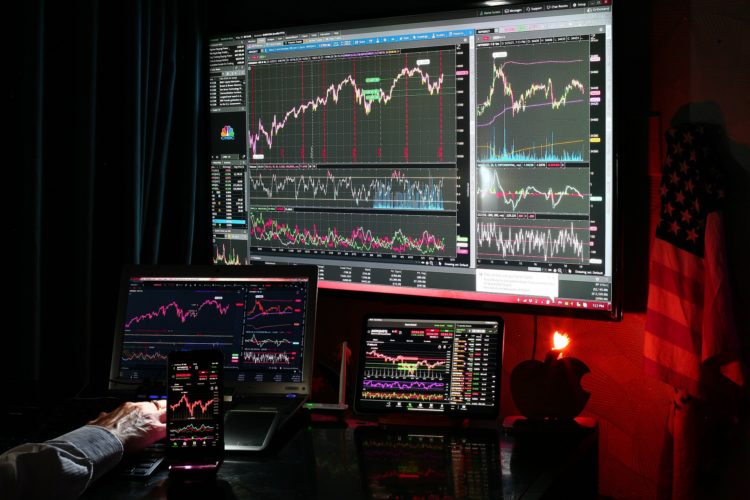
General Motors announced on October 27, 2026 that it will transfer the listing of its common stock from the New York Stock Exchange to the Nasdaq Global Select Market, ending an association with the NYSE that dates back to 1911. The move is a rare exchange migration for a company of GM's size, and the company framed it explicitly as a statement about what kind of company it now wants investors to see: a technology company that happens to build vehicles, rather than a manufacturer dabbling in software.
Background: how exchange listings work, and why they matter
A stock exchange listing is the venue where a company's shares officially trade. For most investors it is nearly invisible: broker orders execute wherever the stock trades, and a transfer changes neither share count nor cost basis, nor requires shareholder action. GM stressed exactly that — no action is required from existing stockholders.
But listings carry symbolic and mechanical weight. The NYSE, founded in 1792, has long been home to America's industrial giants; Nasdaq, founded in 1971, became the home of technology. More importantly, a Nasdaq listing makes a company eligible for potential inclusion in the Nasdaq-100 Index, tracked by funds managing roughly $1.4 trillion in assets, according to reporting on the move. Inclusion is not guaranteed — it depends on further criteria and periodic reconstitution — but eligibility alone can attract index-linked buying if it materializes.
There is a recent precedent: Walmart moved to Nasdaq on December 9, 2025, and joined the Nasdaq-100 in January 2026, according to reports on GM's announcement. GM's move follows that playbook, though its outcome will depend on index rules and timing.
What happened
According to GM's announcement, carried by PR Newswire on October 27, 2026:
- GM's common stock will continue to trade on the NYSE under the ticker symbol "GM" through market close on November 16, 2026.
- The company expects to begin trading as a Nasdaq-listed company on November 17, 2026, continuing under the same "GM" ticker.
- The board authorized the voluntary withdrawal from the NYSE and the move to Nasdaq on October 26, 2026, the day before the announcement, according to the company's SEC filing as reported by ABC Money.
- No action is required by existing stockholders.
GM's chief financial officer, Paul Jacobson, tied the decision directly to strategy: "GM's customer-focused, technology-driven strategy is creating value for our stockholders, making Nasdaq a natural home for our listing as we grow," he said, adding thanks for the company's long-standing partnership with the NYSE and its "remarkable legacy."
The market reacted warmly: GM shares rose more than 5 percent on October 27, 2026, closing at $80.54, up $4.23, per GM Authority. Reports noted the announcement followed a recent $20 billion buyback announcement and an October 21 technology showcase in New York City highlighting AI and self-driving advances.
GM's technology story is central: Super Cruise driver assistance, software and services, electrification, and autonomous driving are the assets it wants investors to price as technology, not traditional manufacturing. CEO Mary Barra framed the move similarly, saying the company believes it is undervalued and the switch signals that conviction, per reporting on the announcement.
Why it matters for founders and investors
For founders, GM's migration is a lesson in narrative as strategy. A listing venue changes no product, revenue, or margin — but it changes the peer group investors benchmark against, the indexes that may hold the stock, and the story analysts tell. For a startup nearing a listing, exchange choice is an early positioning decision: Nasdaq signals technology and growth; the NYSE signals scale, stability, and industrial heritage. GM, rooted in the second tradition, is deliberately claiming the first.
For investors, the practical implications are modest but real. Existing shareholders need do nothing, and the transfer itself is not a taxable event. The upside case rests on potential Nasdaq-100 inclusion, which could drive index-fund buying; the risk is that eligibility does not convert into membership, and that the market's initial enthusiasm fades if the technology story does not translate into software-driven revenue. The 5 percent pop on announcement day is best read as the market pricing in the signal, not the substance.
More broadly, the move reflects how the auto industry's center of gravity has shifted. When competition is defined by driver-assistance software, batteries, and AI, an automaker's most valuable assets increasingly resemble a technology company's. GM's transfer is less a financial engineering exercise than a branding decision — a reminder that in public markets, where you list can be part of what you are.
Angeled.com connects founders with investors.
ABC Money, "General Motors Confirms Nasdaq Listing Transfer From NYSE," October 2026.
GM Authority, "GM Moving Stock Listing From NYSE To Nasdaq," October 2026.
New York Times reporting on the GM listing transfer, as cited by Digital Today, October 28, 2026.
Read Next
The Data-Center Backlash Is Now an Election Issue — and Infrastructure Funding Will Feel It
Alphabet Discloses $548M Qualcomm Stake in Q3 13F Filing — What a 13F Really Shows
Friday's Bounce After the AI Rout: What the Rebound Really Signals
The AI Trade Unwind: What the November 5 Rout Means for Founders
U.S. Stocks Plunge as Nasdaq Enters Correction in AI Trade Unwind
Ad-Tech Splits in Q3: Magnite's Connected TV Surges 39% While Criteo Shrinks 11%