




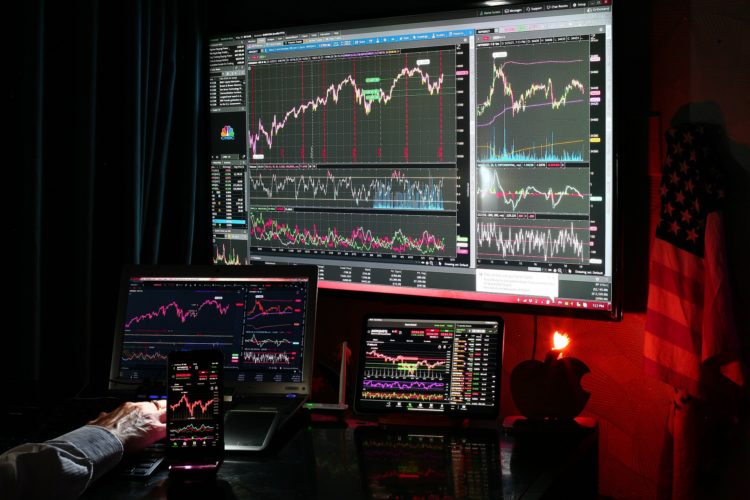
The most sobering item in the October 6, 2026 AI news cycle wasn't a funding round — it was a central bank. According to an AI news briefing published that day, the Bank of Japan cautioned that massive AI-related investments may be masking financial vulnerabilities and warned that markets could face volatility if AI monetization fails to justify current spending levels. When a central bank starts using the word "vulnerabilities" about your sector, it's worth a calm, honest read — not panic, but planning.
What happened
The Bank of Japan's warning landed against a backdrop of genuinely staggering numbers: DeepSeek's reported ~$12 billion raise, Lambda's $4 billion pre-IPO pursuit, a third quarter that saw $159 billion in global venture funding with roughly 64% flowing to AI, and South Korea's $3.5 billion sovereign AI program. The briefing's framing was careful — not a crash prediction, but a warning that the gap between AI spending and AI monetization is the vulnerability.
That gap is the whole story. Capital expenditure on data centers, chips, and model training is running far ahead of the revenue those investments generate. If the revenue catches up, this was all rational. If it doesn't, the repricing touches everyone downstream — including startups whose customers are the ones doing the spending.
What it means for founders
This AI bubble warning 2026 is a risk-management memo, not a stop-building memo. Practical moves:
- Extend runway now. If you can raise or cut to 24+ months of runway, do it while capital is still abundant. The worst time to fundraise is after the warning becomes consensus.
- Prioritize revenue over growth-at-all-costs. The 2021 playbook — blitzscale on venture subsidy — is exactly what gets punished in a repricing. Real, paying customers are the only hedge. Note the market already rewards this: companies with genuine revenue traction, like the 20x growth reported at Flai or Spiko's $2.7 billion in assets under management, stand apart from the narrative-funded.
- Watch your customers' AI budgets. The canary in the coal mine isn't your burn — it's your buyers'. Reports of internal AI-spend reductions at giants like Meta and Microsoft (including cuts to internal Claude usage) suggest enterprise AI budgets are getting scrutinized. If your revenue depends on customers' experimental AI budgets, diversify into budget lines that survive a downturn.
- Price for value, not for hype. In a tightening environment, "AI-powered" stops being a premium justification. Tie pricing to measurable outcomes — hours saved, errors caught, revenue generated — because that's what survives procurement review.
What it means for investors
Discipline on entry valuations is the obvious lesson, but the subtler one is underwrite monetization, not momentum. The Bank of Japan is really asking: where is the revenue that justifies the capex? Apply that question to every AI deal:
- Does this company have real, growing, diversified revenue — or one design partner and a waitlist?
- Are gross margins software-like, or is inference cost eating the business model?
- If enterprise AI budgets get cut 20%, does this company survive?
Favor the Flais and Spikos — companies where the numbers are already real — over the story stocks. And keep dry powder: if the warning proves prescient, the best vintage years for returns follow repricings, not peaks.
The takeaway
Don't predict a crash — manage the risk. The Bank of Japan didn't say AI is a bubble; it said the spending may be masking vulnerabilities. For founders, that translates to runway, revenue, and customer-budget awareness. For investors, it translates to valuation discipline and a preference for real traction. The founders who treat this warning as a planning input — not a prophecy — will be the ones still standing if the gap between spending and monetization closes the hard way.
Angeled.com connects founders with investors — including the disciplined capital that funds through cycles.
Read Next
The Data-Center Backlash Is Now an Election Issue — and Infrastructure Funding Will Feel It
Alphabet Discloses $548M Qualcomm Stake in Q3 13F Filing — What a 13F Really Shows
Friday's Bounce After the AI Rout: What the Rebound Really Signals
The AI Trade Unwind: What the November 5 Rout Means for Founders
U.S. Stocks Plunge as Nasdaq Enters Correction in AI Trade Unwind
Ad-Tech Splits in Q3: Magnite's Connected TV Surges 39% While Criteo Shrinks 11%