




What Happened
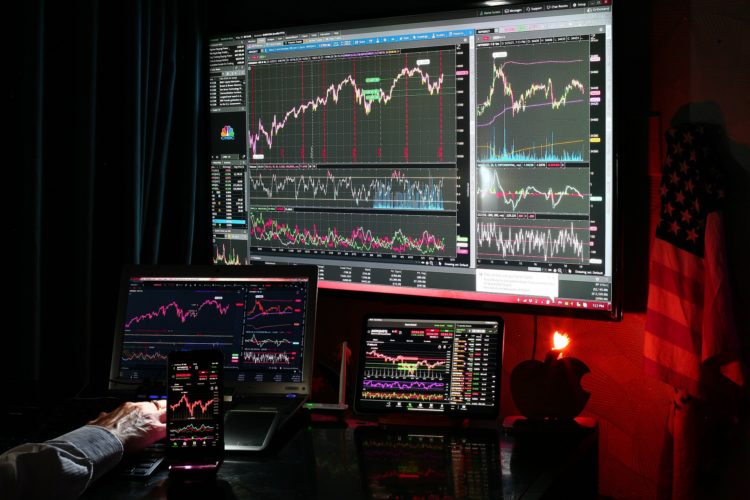
On Tuesday, October 13, 2026, global chip stocks slid sharply after China's ChangXin Memory Technologies (CXMT) announced progress on a new, denser memory chip architecture. In the United States, the Philadelphia Semiconductor Index fell 1.5% — its fifth straight down day, touching a roughly four-week low. Micron dropped 4.5% for its fourth consecutive decline, reaching its lowest level since September 16. SanDisk fell 4.3%, Seagate 5.9%, and Western Digital 5.8%.
The selloff was worse in Asia. In Seoul, Samsung Electronics fell 7% and SK Hynix dropped more than 10%, dragging South Korea's KOSPI index down nearly 5% to around 6,100 — extending a 3.7% slide from Monday. The two chipmakers account for more than half of the KOSPI's market value. Asian markets were reported to be stabilizing on Wednesday, October 14.
The trigger: over the weekend, CXMT President Cao Kanyu told an industry conference in Shanghai that the company had made "key progress" on a 4F² DRAM design and planned to ship server memory built on it by year-end — an announcement confirmed by a company spokesperson.
What Is 4F² DRAM?
To understand why markets reacted so strongly, it helps to understand the technology. DRAM — dynamic random-access memory — is the working memory in computers, servers, and phones. Each bit of DRAM is stored in a memory "cell," and the cell's size determines how many bits can fit on a chip.
The 4F² design compresses the cell to roughly two-thirds of its previous area — an estimated 30–50% increase in memory density, according to TrendForce, meaning significantly more memory per chip and lower cost per bit.
The catch is that 4F² is extremely hard to manufacture. Samsung and SK Hynix, the world's leading DRAM makers, have pursued it for years without success. CXMT says its approach stacks transistors using a vertical surrounding gate to reduce leakage, and connects the memory array to peripheral logic via hybrid bonding. If the company has genuinely achieved the 4F² threshold, it got there before the Korean incumbents — despite U.S. sanctions that block CXMT's access to advanced lithography tools such as ASML's top-end machines.
Skepticism is warranted, however. CXMT disclosed no specifications, yield rates, or customer qualifications. As Morningstar analyst Jing Jie Yu noted, memory leaders and equipment manufacturers have all emphasized how difficult this transition is, and a meaningful gap is expected between unveiling a 4F² product and commercializing it at viable yields.
Who Is CXMT and Why Does It Matter?
ChangXin Memory Technologies is China's largest memory manufacturer and a central player in Beijing's drive for semiconductor self-sufficiency. In July 2026, CXMT's shares reportedly surged 466% on its first IPO day, pushing its market capitalization to around $500 billion — making it China's most valuable company, ahead of Tencent and the state banks, according to Bloomberg reporting.
CXMT's share of global DRAM revenue has risen from roughly 4% a year ago to around 8–10% in the second quarter of 2026. It still faces real hurdles — yield challenges in high-bandwidth memory (HBM) for AI accelerators and limited access to cutting-edge manufacturing equipment — but a move into server DRAM directly threatens the incumbents' most profitable memory segments.
The Broader Market Context: AI Spending Jitters
The CXMT news did not hit a calm market. It landed in an environment where investors were already questioning the sustainability of the AI investment boom. On Monday, October 12, Broadcom CEO Hock Tan told an event in Singapore that many AI investors had "no clue what they are investing in," comparing parts of the AI spending frenzy to casino gambling — a remark that weighed on sentiment even as Broadcom itself forecast $230 billion in AI chip sales by fiscal 2028.
"Investors are jittery and looking for excuses to take profit on AI-related stocks that have outperformed this year, especially memory stocks," said Vey-Sern Ling, senior equity advisor at UBP. Perspective matters: even after the October slide, the Philadelphia Semiconductor Index remained up more than 70% in 2026. The selloff looks less like a verdict on AI demand — which continues to exceed supply — and more like profit-taking amplified by a credible new competitive threat.
What the Selloff Means for AI Infrastructure Valuations
For years, the bull case for memory stocks rested on a supply-constrained market: AI data centers consumed every chip the industry could make, supporting high prices and fat margins. CXMT's advance threatens that scarcity narrative from the supply side, while comments like Tan's question the demand side.
For founders and investors in the AI ecosystem, three implications stand out. First, China's chip self-sufficiency campaign is producing technical milestones that move global markets, and memory is the segment where China is advancing fastest. Second, density breakthroughs compress the cost of compute — bullish for AI applications, bearish for incumbent margins. Third, the speed of the selloff shows how crowded AI-related trades have become: any new narrative triggers a rush for the exits.
The October 2026 CXMT selloff may prove to be noise — a reaction to an unsubstantiated claim with undisclosed yields. But it is also a preview of a structural shift: the era in which three companies controlled the DRAM market is ending, and investors are pricing that in ahead of time. Angeled.com connects founders with investors.
Read Next
The Data-Center Backlash Is Now an Election Issue — and Infrastructure Funding Will Feel It
Alphabet Discloses $548M Qualcomm Stake in Q3 13F Filing — What a 13F Really Shows
Friday's Bounce After the AI Rout: What the Rebound Really Signals
The AI Trade Unwind: What the November 5 Rout Means for Founders
U.S. Stocks Plunge as Nasdaq Enters Correction in AI Trade Unwind
Ad-Tech Splits in Q3: Magnite's Connected TV Surges 39% While Criteo Shrinks 11%