




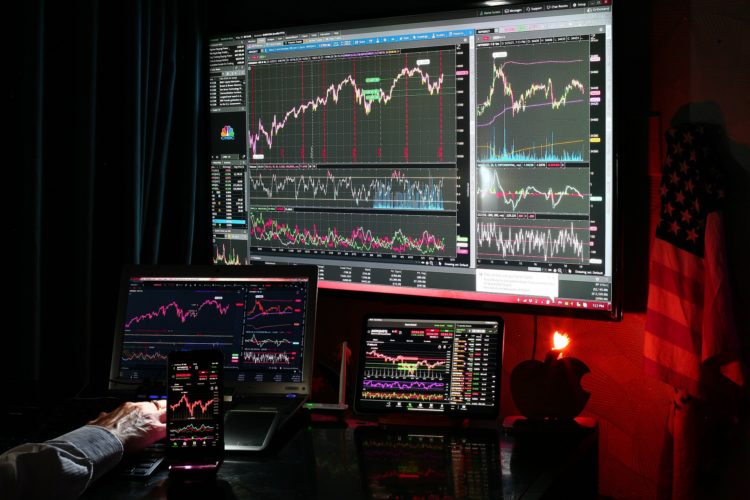
The race to put traditional stocks on blockchain rails hit a significant obstacle on October 23, 2026: 22 listed companies, including Wells Fargo, Arm, and Intuit, objected to trading of their shares on a tokenized stock platform run jointly by OKX and ICE, which had planned to list 63 stocks. The objections mark one of the clearest signs yet that tokenization — one of crypto's most-hyped bridges to mainstream finance — will be negotiated company by company, not adopted by default.
Tokenized stocks are blockchain-based tokens designed to track the price of a listed company's shares, typically backed by the underlying shares held in custody. Supporters argue they could enable 24/7 trading, fractional ownership, and faster settlement. Critics, including many of the companies whose shares would be tokenized, worry about investor confusion, brand and trademark issues, and the legal question of whether a token holder has the same rights as a shareholder.
A Week of Mixed Signals for Crypto Markets
The tokenization dispute landed during a choppy week for digital assets. Bitcoin ended the UTC day on October 23 at $81,071, little changed from its $81,307 open, after trading in an $80,562-$81,895 range, according to Basis Desk. Ether ended at $2,384, down 0.1%. The total crypto market capitalisation stood at $2.69 trillion, up 0.2% over 24 hours, with Bitcoin's share at 60.2%.
Beneath the calm headline, flows told a more cautious story. US Bitcoin ETFs posted a net outflow of 6,998 BTC on October 23, according to Lookonchain data, although the 7-day figure remained a net inflow of 4,312 BTC. Ethereum ETFs shed 19,381 ETH on the day, with 7-day outflows at 115,218 ETH. Onchain Lens reported that BlackRock ETF wallets moved 3,215 BTC (worth $262.41 million) and 38,882 ETH (worth $93.22 million) to Coinbase Prime.
One striking on-chain event also drew attention: more than 230,000 BTC, worth over $21 billion, moved in what analysts described as the largest UTXO spending event of 2026 — most likely a single entity moving funds between its own addresses rather than selling.
Regulators Keep Tokenization on the Agenda
Despite the corporate objections, regulators are not backing away from the topic. The US Securities and Exchange Commission's fiscal 2027 examination priorities add tokenization and the market impact of superintelligence, signalling that tokenized securities will face formal scrutiny rather than benign neglect.
Meanwhile, the head of IRS Criminal Investigation, Jarod Koopman, said a reformed voluntary disclosure program will launch by the end of November, with no separate procedure for crypto — a reminder that tax enforcement continues to tighten around digital assets.
In Argentina, a federal judge dismissed the criminal investigation into President Javier Milei and his sister Karina over the LIBRA memecoin, closing one of the year's most politically charged crypto cases.
What Tokenization Is — and Why Companies Are Pushing Back
Tokenization, in its simplest form, means representing an existing asset — a share, a bond, a fund unit — as a digital token on a blockchain. The promise is efficiency: settlement in minutes instead of days, trading outside market hours, and access for investors in markets where buying the underlying share is difficult.
The corporate objections reveal the other side of that promise. A listed company does not control who tokenizes its shares, but it does bear reputational and legal risk if investors mistake a token for a share, or if a token trades at a price that diverges from the underlying stock. Trademark, disclosure, and shareholder-rights questions all remain unsettled in most jurisdictions. The OKX-ICE episode shows that issuers are willing to assert themselves — and that platforms may need issuer consent, or at least issuer engagement, to scale.
What It Means for Founders and Investors
For founders building in tokenization, custody, or digital-asset infrastructure, the lesson is that the technology is no longer the main bottleneck — permission is. The winning products will be those that solve the issuer's problems: clear legal status, accurate disclosure, and controls that prevent confusion between tokens and shares. Platforms that treat issuers as partners rather than raw material will have an easier path to scale.
For investors, the October 23 flows are a useful reality check. ETF outflows and flat prices after a volatile week suggest that institutional demand, while real, is not unconditional. The tokenization story remains a long-term structural theme, but its near-term milestones will be regulatory decisions and issuer agreements — not price charts.
Angeled.com connects founders with investors.
Basis Desk, "Crypto Market Close Oct. 23, 2026: BTC $81,071," October 24, 2026
FXStreet, "Cryptocurrencies Price Prediction: Bitcoin, XRP & Ethereum — American Wrap 23 October," October 23, 2026
CoinStats, "Crypto News October 23: Market Turns Red as Bitcoin Falls 2.8%," October 23, 2026
Read Next
The Data-Center Backlash Is Now an Election Issue — and Infrastructure Funding Will Feel It
Alphabet Discloses $548M Qualcomm Stake in Q3 13F Filing — What a 13F Really Shows
Friday's Bounce After the AI Rout: What the Rebound Really Signals
The AI Trade Unwind: What the November 5 Rout Means for Founders
U.S. Stocks Plunge as Nasdaq Enters Correction in AI Trade Unwind
Ad-Tech Splits in Q3: Magnite's Connected TV Surges 39% While Criteo Shrinks 11%